DOWNLOAD

| ..:: QUICK MENU ::.. |
| Aims and Scope |
| Journal Team |
| Publication Ethics |
| Authorship Rules and Regulations |
| Authorship Guidelines |
| Manuscript Preparation |
| Submission Process |
About the Journal
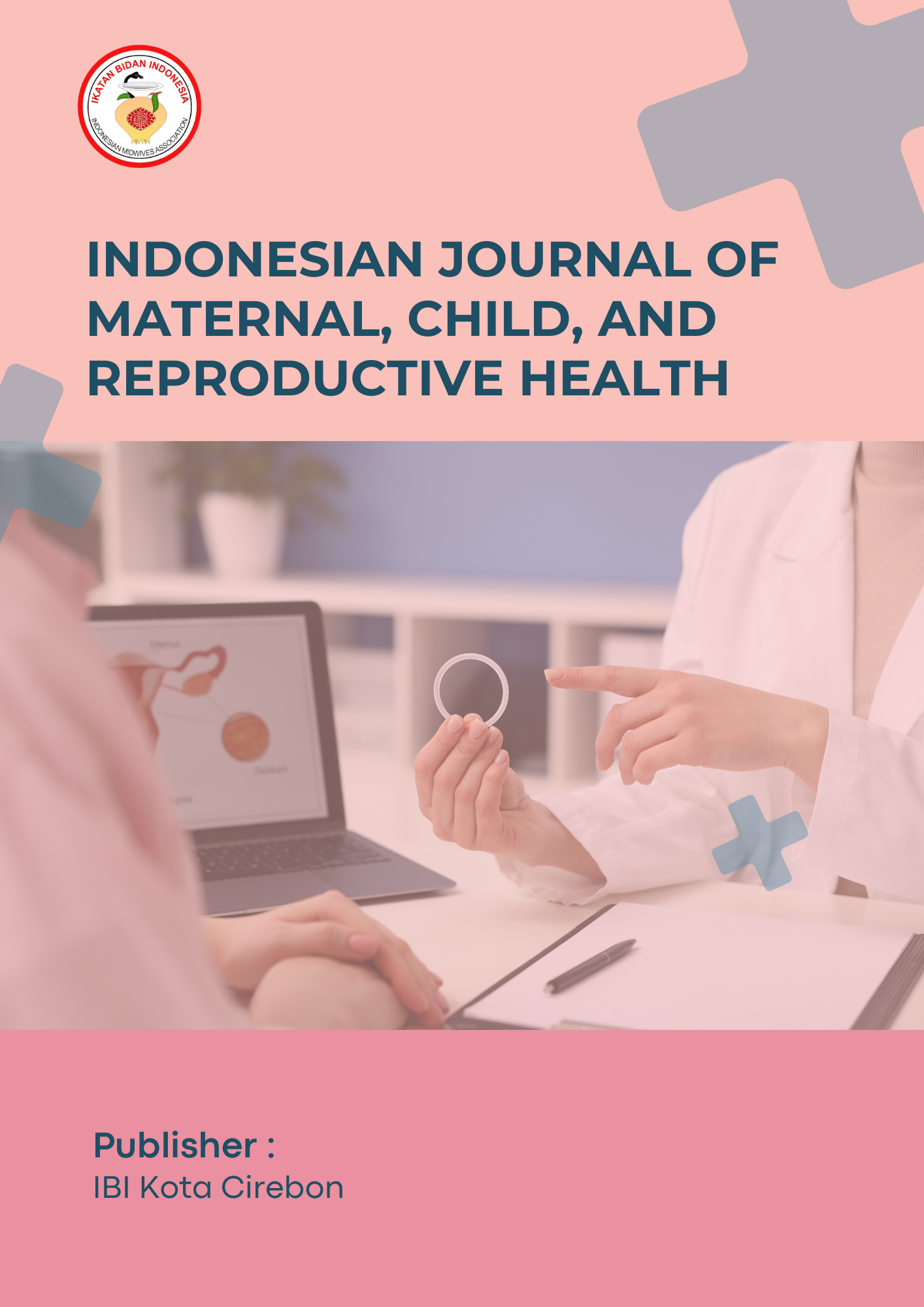
The Indonesian Journal of Maternal, Child, and Reproductive Health (IJMCRH) is an scientic journal, peer-reviewed, open-access journal committed to advancing scholarly discourse, empirical research, innovative practices, and policy development in the domains of maternal, child, and reproductive health. Launched in 2026 by AURIA Strategic Insight in strategic partnership with the Indonesian Midwives Association (Ikatan Bidan Indonesia - IBI) Kota Cirebon, IJMCRH serves as a dedicated platform for disseminating high-quality, evidence-based knowledge that addresses pressing health challenges faced by mothers, infants, children, adolescents, and families. The journal places a strong emphasis on contexts relevant to Indonesia and other low- to middle-income countries, where health disparities, resource constraints, and cultural factors significantly influence outcomes.
It encourages submissions that integrate quantitative, qualitative, and mixed-methods approaches, while prioritizing ethical research, reproducibility, and real-world applicability. The journal's mission is to foster global and local collaborations, ultimately contributing to improved health systems, reduced inequalities, and better-informed policies.
Key operational and publishing details:
Publisher: AURIA Strategic Insight, with collaborative support from IBI Kota Cirebon for expertise in midwifery and community health.
Publisher’s Address: Jl Karang Baru No 31 RT.005 RW.001, Kel. Sunyaragi, Kec. Kesambi, Kota Cirebon
Publication Model: Fully open access, ensuring unrestricted global availability without subscription barriers.
Frequency: Quarterly publication schedule (issues released in March, June, September, and December), supplemented by an "online-first" model where accepted articles are published immediately upon final proofreading to accelerate knowledge dissemination.
Peer Review Model: Rigorous double-blind peer review process, where both authors' and reviewers' identities are anonymized to minimize bias and ensure impartiality. Manuscripts undergo initial editorial screening for scope, originality, and quality, followed by review by at least two independent experts.
Article Identifier: Each article is assigned a unique Digital Object Identifier (DOI), facilitating permanent linking, citation tracking, and discoverability.
ISSN: Application in progress for both electronic (e-ISSN).
Archiving and Indexing: Initial indexing goals include Google Scholar, Directory of Open Access Journals (DOAJ), and SINTA. The journal aims to expand to more advanced databases as it matures.
Article Types:
Fees: To promote inclusivity and support emerging scholars during the journal's inaugural phase, there are no submission fees or article processing charges (APC). This policy will be reviewed annually based on sustainability needs.
Contact Information: Editor, Dr. Ayu Ashari, S.S.T., M.Kes
Email: editor@auria.co.id | Phone: [085188355576] | Website: jurnal.auria.co.id (currently under development with integrated submission system via Open Journal Systems - OJS, in collaboration with IBI Kota Cirebon).
Performance Goals: Emphasis on efficient workflows, with targets for 4-7 days from submission to first decision, 4-8 weeks to acceptance, and high author satisfaction. Metrics such as article views, downloads, and citations will be tracked and reported annually on the website.
DOWNLOAD
| ..:: QUICK MENU ::.. |
| Aims and Scope |
| Journal Team |
| Publication Ethics |
| Authorship Rules and Regulations |
| Authorship Guidelines |
| Manuscript Preparation |
| Submission Process |